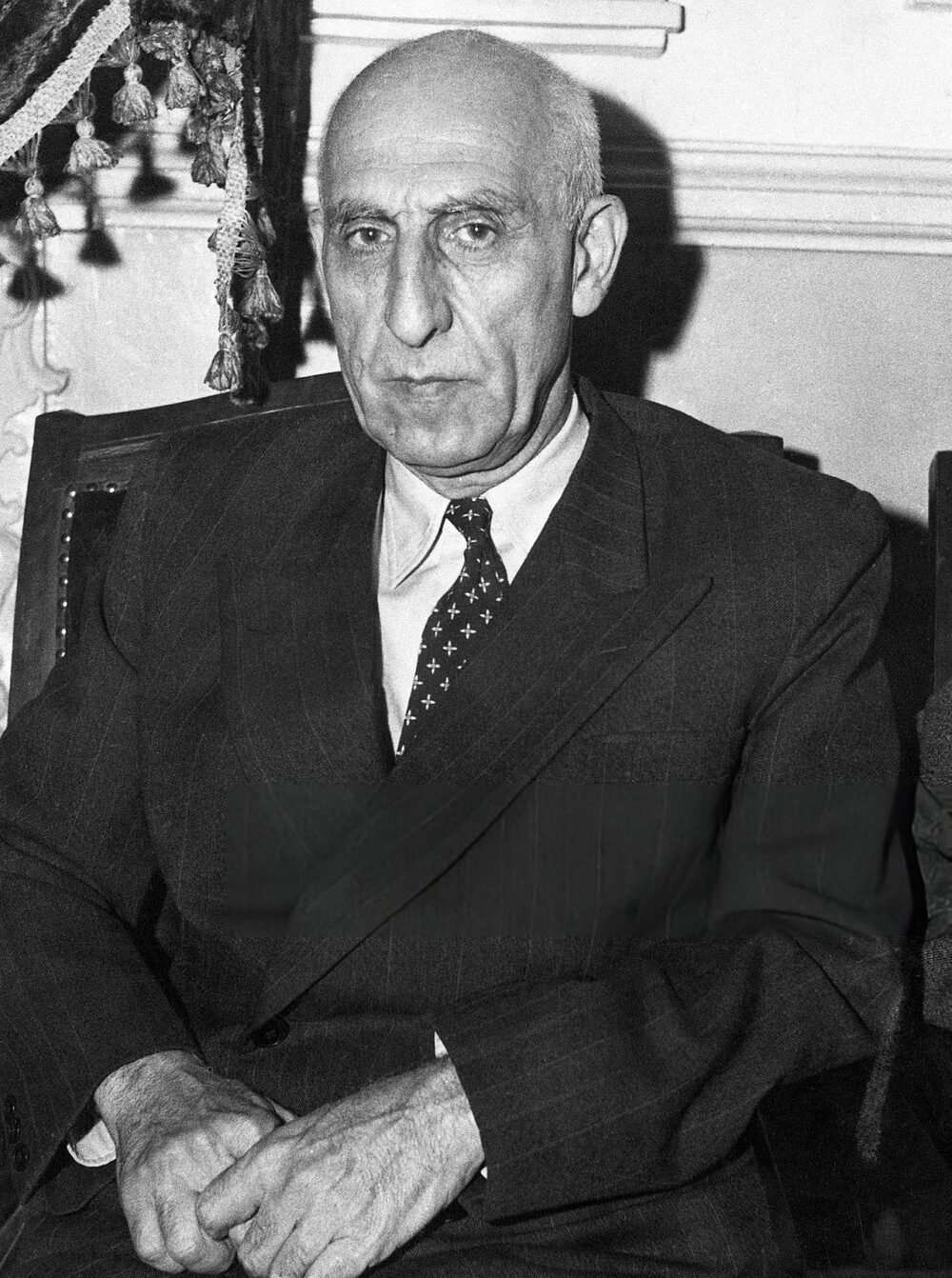
The Night of August 15
Colonel Nematollah Nassiri climbed out of a military car on the quiet street outside the Prime Minister’s residence in Tehran. It was the night of August 15, 1953. He carried a royal decree — a farman — signed by the Shah of Iran, dismissing Prime Minister Mohammad Mossadegh from office and appointing General Fazlollah Zahedi in his place.
The plan was straightforward: deliver the decree, arrest the Prime Minister, announce the transition. The CIA called it Operation TPAJAX. British intelligence called it Operation Boot. Months of preparation, thousands of dollars, a network of agents — all converging on this moment.
Nassiri walked toward the front door. Guards were waiting.
Mossadegh had been tipped off — likely by the Tudeh Party’s military network, which had infiltrated the Imperial Guard. His own guards arrested Nassiri on the spot. The farman was seized. The plan collapsed.
In northern Iran, the Shah — who had been waiting for news — panicked and fled first to Baghdad, then to Rome. In Washington, CIA headquarters sent a cable to station chief Kermit Roosevelt ordering immediate evacuation. The State Department began drafting memos to accept Mossadegh’s continued rule.
If the CIA controlled events in Iran like a puppeteer, August 16 should have been the end of the story: operation failed, Mossadegh triumphant, American spies on a plane out.
Four days later, Mossadegh’s government fell. Tanks surrounded his home. He escaped over the garden wall and surrendered the next morning.
What happened in those four days is the story most people have never heard.
The Version You Know
You’ve probably encountered one version of 1953: the CIA overthrew Iran’s democratically elected Prime Minister to protect Western oil interests, installed a puppet dictator, and set in motion the chain of events that led to the 1979 revolution, the hostage crisis, and decades of hostility.
This version isn’t entirely wrong. But it was assembled from parts supplied by people who each had reasons to simplify.
The earliest framers were the Soviet Union and Iran’s communist Tudeh Party. Radio Moscow and the clandestine “National Voice of Iran” broadcast immediately after August 19 that the Shah was an “American puppet” and the entire event was an imperialist plot. The Tudeh — the most disciplined political force in Iran, which had failed to lift a finger to save Mossadegh — found in this narrative a convenient explanation for their own paralysis. If the CIA was omnipotent, the Tudeh’s inaction was forgivable.
The second supplier was, paradoxically, the CIA itself. Kermit Roosevelt’s memoir Countercoup, published in 1979, presented him as a master spy directing events from behind the curtain. Declassified internal CIA files describe the book as “essentially a work of fiction.”1 President Eisenhower reportedly said Roosevelt’s original report “read more like a dime novel than a historical report.” But the Agency needed a win — by claiming full credit for the Shah’s restoration, it solidified its reputation as a kingmaker, which then emboldened operations in Guatemala and Cuba.
When Roosevelt published, the CIA forced him to remove references to MI6 — to protect the British — forcing him to attribute British actions to the CIA or fictional entities. This censorship further inflated the American role in the public imagination.
The third supplier was Stephen Kinzer’s bestselling All the Shah’s Men (2003), which drew a straight line from 1953 to 1979 to 9/11 — simplified complex history into a moral fable that appealed to Western audiences during the War on Terror: “We caused this.”
Each source had its reasons. The Soviets needed to delegitimize the Shah. The CIA needed to justify its budget. The National Front needed a flawless martyr. Western liberals needed an Original Sin to explain away the Islamic Republic’s brutality. The result is a narrative in which thousands of Iranians who acted on August 19 from their own convictions have been erased — replaced by the image of a single CIA station pulling strings.
The technique has a name: source laundering. A Soviet propaganda frame was validated by CIA self-mythologizing, picked up by journalists, embedded in bestselling books, and repeated until it hardened into received wisdom. By 2000, Secretary Albright was publicly apologizing for it.2 By 2009, President Obama was citing it during nuclear negotiations. The laundering was complete.
Here’s what the fuller picture looks like.
The Man Who Reigned and Ruled
Start with a question most people never ask: what does “democratically elected” actually mean in the context of 1953 Iran?
Mossadegh was not elected by popular vote. Iran’s system didn’t work that way. He was a Qajar aristocrat — his mother was a princess from the royal family displaced when the Pahlavis came to power — who was elected to the Majles (parliament) as a Tehran deputy. In April 1951, following the assassination of Prime Minister Haj Ali Razmara, the Shah appointed Mossadegh as PM under Article 46 of the 1907 Supplementary Fundamental Laws: “The appointment and dismissal of Ministers is effected by virtue of the Royal Decree of the King.”3 The Majles then confirmed him by a vote of confidence. Dozens of prime ministers before and after him were chosen the same way.
Calling Mossadegh “democratically elected” is a retrospective projection — equating him with an American president to maximize the perceived illegitimacy of his removal. He was selected through the same mechanism as a British prime minister: parliamentary appointment, not direct popular election.
But here’s the part that makes the “CIA overthrew democracy” narrative collapse: by August 1953, Mossadegh was not governing as a democrat.
In early 1953, he demanded and received plenary powers — the right to rule by decree. He exercised these powers for eighteen months. He closed opposition newspapers. He jailed critics. He suspended appellate courts. And on August 3, 1953, he held a referendum to dissolve the Majles itself.
The referendum was conducted with separate tents for “Yes” and “No” votes — no secret ballot. The “No” tents were guarded by chaghookeshan, knife-wielding enforcers. The result: 2,043,389 Yes to 1,207 No.4 A 99.9% approval rate — a figure that has never been achieved in any competitive democracy in human history, but appears regularly in the plebiscites of authoritarian regimes.
Parliament was dissolved. The institution that legitimized Mossadegh’s own premiership — the Majles that had confirmed him — was gone, destroyed by his own hand. His former ally Dr. Mozaffar Baghai called it an “auto-coup” against the legislature.
This created an unresolvable constitutional paradox. Mossadegh argued that the Shah could only dismiss a prime minister through a parliamentary vote of no confidence under Article 67. But he had just eliminated parliament. In its absence, the Shah’s Article 46 power became the only remaining legal mechanism for government transition. Mossadegh had destroyed his own shield.
At his trial, Mossadegh declared: “In a constitutional monarchy, the Shah reigns but does not rule.” But the constitutional theory he invoked required a functioning parliament to check royal power. He had dismantled it.
The Coalition Nobody Mentions
If the 1953 overthrow was a CIA operation, it had an unusual feature: most of the people carrying it out had their own reasons for doing so that had nothing to do with the CIA.
Ayatollah Kashani had been Mossadegh’s most powerful ally. As Speaker of the Majles, this populist cleric commanded the networks no Western intelligence agency could replicate: the lutis (bazaar strongmen bound by codes of loyalty) and merchants who had defended Mossadegh during the July 1952 Si-e Tir uprising. By mid-1953, Kashani had turned against Mossadegh completely — over his demand for plenary powers, his secular appointments, his tolerance of the communist Tudeh, and his refusal to implement religious policies. The same street networks that saved Mossadegh in 1952 mobilized against him in 1953. Historians Richard Cottam and Darioush Bayandor argue this was a genuine ideological break, not a purchased betrayal.5
Dr. Mozaffar Baghai, leader of the Toilers Party, had been a coalition partner. He defected, publicly accusing Mossadegh of violating the constitution by dissolving the Majles and governing by decree. His open letters provided the ideological ammunition for the opposition — and his street cadres were active on August 19.
The bazaaris — the merchant class — had been the National Front’s financial backbone. But the British oil blockade had devastated them. Iran’s oil exports collapsed from 241.4 million barrels in 1950 to near zero by 1952.6 Hyperinflation, unpaid civil servants, a strangled economy. By August 1953, the bazaaris viewed Mossadegh’s intransigence not as heroism but as a path to bankruptcy. If your business depended on trade, and a foreign blockade had collapsed your revenue to zero, and the leader who promised to fight for your rights refused every compromise that might reopen the markets — you wouldn’t need a foreign agent to tell you the policy had failed.
The military officer corps remained largely loyal to the monarchy. General Zahedi had his own independent power base. He rallied officers not by promising American dollars but by appealing to their oath to the Shah and the constitution, armed with the now-published farmans.
Grand Ayatollah Boroujerdi, the supreme Shia authority, remained quiet but tacitly supported the Shah. The conservative clergy feared one thing above all: a Tudeh takeover. The CIA exploited this real fear through a technique called false-flag provocation — its TPBEDAMN program sent agents posing as Tudeh members to harass clerics and stage mock attacks on mosques, amplifying genuine anxiety past the point of rational calibration.7 The fear of communism was real; the CIA’s contribution was to weaponize it. The Tudeh had hundreds of officers in the military. The clergy didn’t need the CIA to tell them what communism would mean for religion.
And the Tudeh itself — paralyzed. Stalin had died in March 1953. Moscow was in transition, cautious about provoking the West. The Tudeh leadership was suspicious of Mossadegh’s “bourgeois” background. They failed to form a united front with him until it was too late.
Four Days in August
After Nassiri’s arrest on the night of August 15, events moved fast — but not in the direction the CIA had planned.
August 16-17: Tudeh crowds flooded the streets, tearing down statues of the Shah and demanding a republic. Foreign Minister Hossein Fatemi delivered incendiary speeches calling for the monarchy’s abolition. To the clergy, the bazaar, and the military, this looked like confirmation of their worst fear: Mossadegh was opening the door to communism.
Meanwhile, Roosevelt and the Rashidian brothers used the interregnum to publicize copies of the Shah’s farmans, reframing the narrative from “failed coup” to “constitutional restoration.”
August 18: Ambassador Loy Henderson met with Mossadegh, warning that the United States would withdraw recognition if order was not restored. Henderson exaggerated the Tudeh threat. That evening, Mossadegh made the decision that sealed his fate: he ordered the police and military to clear the Tudeh demonstrators from the streets.
It was meant to demonstrate control. The Tudeh leadership, adhering to party discipline, ordered their cadres to stand down. By the morning of August 19, the only organized force that could have countered a royalist mobilization had voluntarily evacuated.
August 19 (28 Mordad): By 8:00 AM, pro-Shah crowds were gathering in the bazaar, led by lutis Tayyeb Haj Rezai and Shaban Jafari — nicknamed “The Brainless” — funded by the Rashidian brothers and CIA money. By 10:00, police and military units had joined. By noon, they reached central Tehran. Army units refused to fire on civilians chanting “Long Live the Shah.” At 14:30, Radio Tehran was captured and broadcast the Shah’s farman appointing Zahedi. At 16:00, Zahedi emerged from hiding to take command. By 17:00, tanks surrounded Mossadegh’s home at 109 Kakh Street. A fierce battle erupted between loyalist guards and forces under General Batmangelich and Colonel Farzanegan.
By 19:00, the home was breached and looted. Mossadegh escaped over the garden wall. He surrendered the next morning. More than 300 people were dead.
The CIA spent roughly $60,000 to $100,000 on August 19 itself.8 But thousands of people in the streets, police defections, military tank columns — this was not a phenomenon that cash alone could produce.
The Honest Ledger
None of this means the CIA and MI6 were innocent bystanders.
Operation TPAJAX was real. Operation Boot was real. The Rashidian intelligence network — British assets transferred to CIA control after Mossadegh expelled British diplomats in October 1952 — was real. The TPBEDAMN propaganda program, with its false-flag operations and manufactured Red Scare, was real. American and British money funded the Rashidians and flowed to street organizers. Roosevelt stayed in Tehran after headquarters ordered evacuation and helped coordinate the publication of the farmans.
The CIA and MI6 provided the script, the funds, and the spark.
But the actors — Zahedi’s tanks, Kashani’s street networks, Baghai’s ideological ammunition, the bazaaris’ money, the military officers’ oaths — were Iranian. To attribute the entire phenomenon to a small CIA station is to attribute near-mythical powers of mind control to a handful of intelligence officers, erasing the agency of thousands of Iranians who acted from their own political convictions and economic self-interest.
The documentary evidence supports what historians Darioush Bayandor and Ray Takeyh have called a hybrid operation9: foreign intelligence exploited the fractures in a collapsing government, but the fractures were real, the collapse was already underway, and the forces that moved on August 19 were overwhelmingly Iranian.
The real tragedy of 1953 is not that foreign powers intervened. It’s that they exploited the fragility of Iran’s nascent democracy — a democracy that Mossadegh himself was systematically undermining.
The Erasure
The simplified “CIA coup” narrative doesn’t just distort history. It erases people.
It erases Kashani’s genuine fear that Mossadegh was becoming a dictator. It erases Baghai’s constitutional arguments. It erases the bazaaris going bankrupt under an oil blockade. It erases the military officers who believed they were defending the constitution. It erases the Tudeh’s strategic paralysis. It reduces every Iranian who acted in August 1953 to a puppet of Western intelligence.
There is a word for the assumption that people in the Middle East cannot act from their own political convictions — that their choices must always be explained by a Western hand behind the curtain. It is a form of Orientalism, dressed in the language of anti-imperialism.
The narrative serves everyone except the truth. The Islamic Republic uses it as proof of eternal Western victimization. The Tudeh used it to explain away their own failure. The CIA used it to justify its budget. Western liberals use it to perform acts of contrition. The National Front uses it to maintain Mossadegh as a flawless martyr without painful introspection.
What the narrative cannot accommodate is the possibility that 1953 was a complex constitutional crisis in which Iranians on all sides exercised agency. That some were right and some were wrong. That foreign powers made it worse. And that reducing it to a simple morality play about American villainy infantilizes the very people it claims to defend.
What Nassiri Carried
Colonel Nassiri carried a piece of paper to Mossadegh’s door on the night of August 15. It was a royal decree invoking Article 46 of Iran’s constitution — the same mechanism by which Mossadegh had been appointed two years earlier.
Whether that decree was legitimate is a constitutional question Iranians still debate. Whether the CIA and MI6 manipulated the crisis is a historical question with a clear answer: yes.
But whether the thousands of Iranians who acted in the days that followed — the clerics, the merchants, the soldiers, the street fighters — were merely puppets executing a foreign script is a question that answers itself. Puppets don’t have grievances. Puppets don’t break with allies over constitutional principles. Puppets don’t go bankrupt. Puppets don’t fear communism.
The people who moved in August 1953 were not puppets. The story of 1953 belongs to them — all of them — as much as it belongs to the CIA.
For the constitutional forensics behind the Shah’s dismissal decree, see The Article 46 Debate. For the Iranian actors who actually moved on August 19, see Zahedi’s Tanks. For the economic strangling that made the political crisis inevitable, see The Oil-Less Economy. To test what you know about Iran’s hidden history, take The Iran Test.
Footnotes
-
National Security Archive, “The Secret CIA History of the Iran Coup, 1953,” George Washington University, declassified internal CIA assessment of Roosevelt’s Countercoup ↩
-
Secretary of State Madeleine Albright, remarks before the American-Iranian Council, March 17, 2000 ↩
-
Supplementary Fundamental Laws of October 7, 1907, Article 46, text reproduced in Encyclopaedia Iranica, “Constitutional Revolution iii: The Constitution” ↩
-
1953 Iranian parliamentary dissolution referendum results, reported in contemporary press including Troy Times Record, August 5, 1953 ↩
-
Darioush Bayandor, Iran and the CIA: The Fall of Mosaddeq Revisited (Palgrave Macmillan, 2010); Richard Cottam, Nationalism in Iran (University of Pittsburgh Press, 1979) ↩
-
Anglo-Iranian Oil Company production records; Office of the Historian, Foreign Relations of the United States, 1952-1954, Iran, Volume X ↩
-
Donald Wilber, CIA Clandestine Service History of Operation TPAJAX, March 1954, declassified and published by the National Security Archive, 2000 ↩
-
CIA operational budget estimates from Wilber’s Clandestine Service History and Foreign Relations of the United States, 1952-1954, Iran, 1951-1954 ↩
-
Ray Takeyh, “The Collapse Narrative,” Texas National Security Review, November 2019; Bayandor, Iran and the CIA ↩