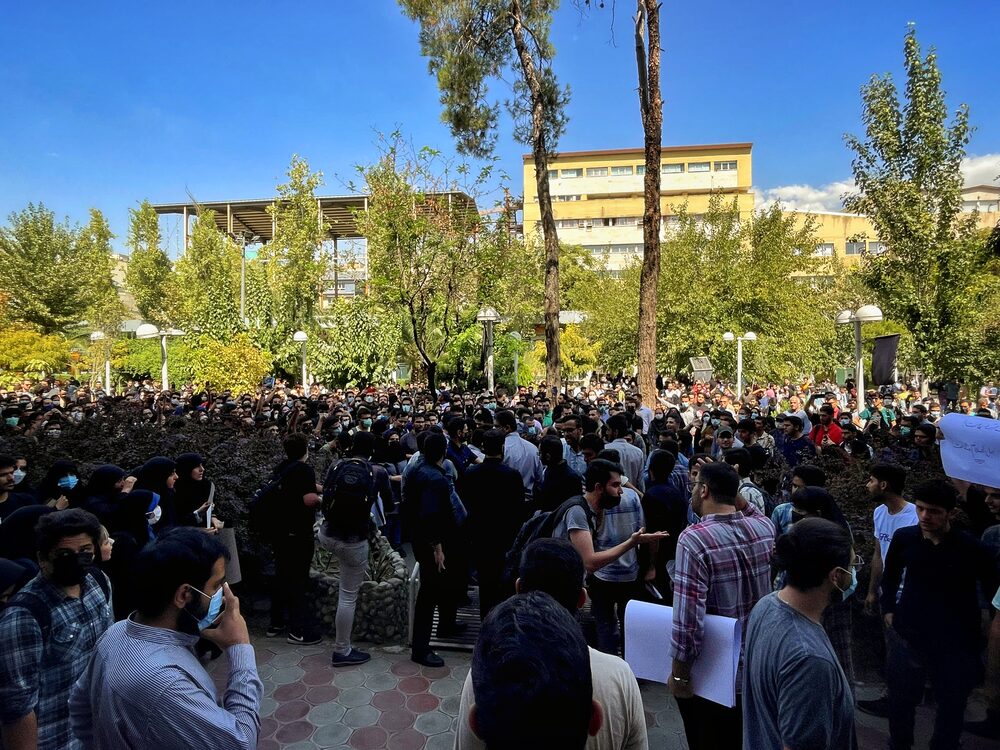
The Voice
In October 2022, a rapper from Isfahan named Toomaj Salehi recorded a song about the life most Iranians live but few are allowed to describe: the collapsing economy, the executed protesters, the government that spends billions on proxy wars while its own people starve.
“Someone’s crime was being a woman,” he rapped. “Someone’s crime was dancing.”
They arrested him. They tortured him. They sentenced him to death.
His case made international headlines. But it also revealed something the headlines missed. When researchers asked Iranians what they actually thought — anonymously, through encrypted channels — they discovered that Toomaj wasn’t an exception. He was the sound of a supermajority that the world had been measuring wrong for decades.
This is the story of what those measurements found.
Two Ways to Listen
Here’s the problem with polling a dictatorship: the phone is a weapon.
In Iran, landlines are registered to physical addresses and national ID numbers. When an unknown caller asks about your political views, the rational calculation is simple — the caller might be the Ministry of Intelligence, the Basij, or someone reporting to either. You say what keeps you alive. Economists call this “preference falsification.” Studies in China and Russia have shown that direct questioning in authoritarian states inflates regime support by 15 to 40 percent.1
In Iran, where the state intrudes into the most intimate corners of private life — what you wear, what you drink, what you name your children — the gap is almost certainly larger.
This is how the world has been polling Iran for decades: by calling people on traceable phones and recording the performance of compliance.
Two independent research organizations found a way around the fear.
GAMAAN — the Group for Analyzing and Measuring Attitudes in Iran, based at Tilburg University in the Netherlands — distributes surveys through encrypted channels: Telegram, Instagram, and WhatsApp, accessed via VPN.2 No phone numbers. No voice interaction. No way to trace a response to a person. Their raw samples reach 50,000 to 100,000 respondents, then get weighted against five Iranian census variables — age, sex, education, province, and rural/urban distribution — to correct for online sampling bias.
Their founding thesis: “Bias in demographics can be mathematically corrected, but bias in truthfulness cannot.”
Stasis Consulting, based in Washington, D.C., uses telephone polling but treats it differently. When a respondent hangs up, says “I don’t know,” or refuses to answer a question about the Supreme Leader, Stasis doesn’t discard that response. They read it as data. In 2024, refusal rates on presidential approval questions tripled to 26 percent — a historic deviation that Stasis interpreted not as noise, but as a proxy for opposition.3
The validation came when both organizations, using completely different methods, converged on the same numbers. GAMAAN found that 72 percent of Iranians oppose mandatory hijab. Stasis found 68 percent. Two completely different methodologies. Nearly identical results.
The truth is in that vicinity.
For a deeper exploration of how these teams work — and why traditional polling has been measuring fear instead of opinion — see The Methodology Wars.
The Secularization Earthquake
The most surprising data has nothing to do with politics. It’s about identity.
The Islamic Republic claims that over 90 percent of Iran is Shi’a Muslim. GAMAAN’s 2020 religion survey — 50,000 respondents, anonymously, through encrypted channels — found something radically different.4
What Iranians Actually Believe
GAMAAN 2020 survey — 50,000 respondents inside Iran
| Identity | GAMAAN Finding | Regime Claim |
|---|---|---|
| Shi’a Muslim | 32.2% | 90%+ |
| No religion | 22.2% | — |
| Atheist | 8.8% | — |
| Zoroastrian | 7.7% | <0.1% |
| Spiritual | 7.1% | — |
| Agnostic | 5.8% | — |
| Sunni Muslim | 5.0% | ~9% |
Read that table again. The state religion of the Islamic Republic holds minority status among its own people.
Sixty percent of Iranians do not pray. Thirty-five percent drink alcohol — despite a total ban enforced by 80 lashes. Forty-seven percent report “losing their religion” over their lifetime. And 68 percent believe religious prescriptions should be excluded from legislation even if believers hold a parliamentary majority.
The paradox of theocracy: because the state is religious, opposition takes the form of secularism. The Islamic Republic has achieved the opposite of its founding goal. Forty-five years of attempting to engineer a devout Islamic society produced the fastest secularization in the Middle East — faster than Turkey, faster than any Arab state measured by the Arab Barometer. Scholars describe the trend as structural and irreversible.
The Four Million Zoroastrians Who Don’t Exist
The 7.7 percent figure is the most revealing number in the table.
Iran has approximately 25,000 ethnic Zoroastrians. If 7.7 percent of the population identifies as Zoroastrian, that’s nearly four million people — a 160x multiplier over the actual community. They haven’t converted. Most have never been to a fire temple.
What they’ve done is make a statement.
Scholars call them “Survey Zoroastrians” — people who claim a pre-Islamic civilizational identity as a form of political protest.5 When a young Iranian in Isfahan checks “Zoroastrian” on an anonymous survey, they’re saying: I am Persian, not what this regime says I am. They share the Faravahar symbol on social media, quote the Avesta, and cite the ancient triad Humata, Hukhta, Hvarshta — Good Thoughts, Good Words, Good Deeds — as a native ethical code superior to state-enforced Sharia.
This identity war plays out in the streets every year. On October 29 — Cyrus Day — thousands gather spontaneously at the tomb of Cyrus the Great in Pasargadae, chanting “Iran is our country, Cyrus is our father” and “Clerical rule is tyranny, Cyrus represents human rights.” The regime responds by turning the site into a fortress: roads blocked, “maintenance” scheduled, activists arrested days in advance.
A regime that claims divine legitimacy is terrified of a king who died 2,500 years ago.
During Chaharshanbeh Suri — the Festival of Fire — millions jump over bonfires in defiance of clergy who condemn it as “fire-worship.” Security forces deploy annually. The bonfires become anti-regime protests. Khamenei’s photos burn in the flames. Even the naming of children has become a battlefield: the National Organization for Civil Registration pressures parents toward Islamic names, and parents fight legal battles to register their sons as Kourosh or Dariush. A surge in pure Persian names is itself an act of resistance.
The Governance Verdict
If the identity data is surprising, the political data is devastating for the regime.
GAMAAN’s 2024-2025 surveys — the most comprehensive ever conducted inside Iran — found:6
The Governance Verdict
GAMAAN 2024–2025 surveys — political preferences inside Iran
| Question | Result |
|---|---|
| Oppose the Islamic Republic | ~80% |
| Favor secular democratic republic | ~89% |
| Support the principles of the Islamic Revolution | 11% |
| Favor Velayat-e Faqih (religious rule) | <15% |
| Support mandatory hijab | <20% |
| Blame government (not sanctions) for economic crisis | 78% |
The regime that claims a divine mandate cannot muster one in ten citizens who support its founding principles. Reformism — the idea that the system can be fixed from within — has collapsed below 10 percent. The slogan chanted in the streets — “Reformist, Hardliner, the game is over” — is fully supported by the data.
And when those elections happen anyway? In 2024, GAMAAN predicted a 77 percent boycott. Stasis predicted a record-low 34 percent turnout. The official result was about 40 percent — though observers estimated 20 to 30 percent in major cities. Many of those who did vote were state employees who needed a stamp on their ID card to keep their jobs.
The polls captured the intent of the electorate. The elections captured the capacity of the state to coerce participation.
The Sanctions Myth
One number in that table deserves special attention: 78 percent blame government corruption, mismanagement, and proxy spending for the economic crisis — not sanctions alone.
This demolishes a common Western assumption: that sanctions are the primary source of Iranian suffering and that maintaining them alienates the population. The data says the opposite. Iranians know exactly who is responsible for their poverty. “Neither Gaza nor Lebanon — my life for Iran” didn’t become the defining protest chant of a generation because of American foreign policy.
The Shy Monarchist
Here is where the data becomes politically inconvenient for everyone.
In GAMAAN’s opposition leadership surveys, one name consistently leads: Reza Pahlavi, the son of the last Shah, with 31 to 39 percent support — more than three times the next most popular figure.7 The imprisoned rapper Toomaj Salehi polls at 6 percent. Nobel laureate Narges Mohammadi at 5 percent. The MEK — which maintains a formidable lobbying operation in Washington and Paris — registers below 1 percent. In some datasets, the MEK’s leader was chosen by only two respondents out of thousands.
In September 2025, GAMAAN asked a more pointed question: What is your opinion about Reza Pahlavi declaring leadership of the transition period? The answers were sharper than the general preference data.8
| Response | Percentage |
|---|---|
| Strongly agree | 35.4% |
| Somewhat agree | 13.4% |
| Total agree | 49% |
| Strongly disagree | 30.6% |
| Somewhat disagree | 4.5% |
| Total disagree | 35% |
| No opinion | 16% |
The general surveys measure who Iranians admire. This question measured who they would follow into a transition. Nearly half said Pahlavi.
But who supports Pahlavi? The demographic breakdowns from the general preference surveys — which measure underlying support rather than crisis-moment willingness to follow — shatter every assumption.
The working class. General support is highest — 33 percent — among Iranians without higher education. The “barefoot” Iranians whom the regime claims as its base have defected to the crown. This is not an elite diaspora fantasy. It is a working-class phenomenon.
Men more than women — 36 percent versus 27 percent — but female support is significant and growing.
The northern provinces — Gilan at 42 percent, Alborz at 40, North Khorasan at 38 — historically the most modernizing regions of the country.
Cross-ideological. Eighty-one percent of monarchists support Pahlavi, as expected. But so do 30 percent of those with “no specific preference” and 20 percent of self-identified republicans. Many view him not as a future absolute monarch but as the only realistic vehicle for transition.
GAMAAN director Ammar Maleki noted that the 16 percent undecided in the September 2025 survey “usually decide based on the situation and the general public mood, and it seems that during the recent protests, some of them joined Pahlavi’s supporters.” If even half the undecided broke toward Pahlavi, his support would approach 57 percent — a functional majority.
Pahlavi himself doesn’t campaign for absolute monarchy. He explicitly models his approach on Juan Carlos of Spain — the monarch who inherited authoritarian legitimacy, oversaw the transition to democracy, and stepped back into a constitutional role. His platform calls for a transitional government leading to a constituent assembly and a national referendum on the form of government. “I’m not asking anyone to choose monarchy,” he has said. “I’m asking for the right to choose.”
This framing lets secular republicans support him without committing to the crown. It’s a coalition strategy, not a restoration project.
The “Neither” Problem
But here is the honest part of the leadership data: in general preference surveys, 17 percent of Iranians choose “none of the above.” The gap narrows considerably on the transition question — where 49 percent back Pahlavi directly — but there is still more consensus on what Iranians want to destroy than on what they want to build. The difference between governance preference (89 percent want secular democracy) and leadership preference reveals the structural challenge facing any post-regime transition.
The Streets Confirmed the Polls
In January 2026, the hidden opinions measured by anonymous surveys became visible in the most dangerous possible way.
Protests erupted in 675 confirmed locations across 210 cities in all 31 provinces. This was not localized unrest. It was a national verdict.
The geography told the story.
Mashhad — the holy city, Khamenei’s birthplace. Large crowds chanting “Javid Shah” — Long Live the King — in the city center. Reports indicated that regime forces briefly lost control of parts of the city. The symbolic weight: the Supreme Leader’s hometown repudiating him by name.
Qom — the theological heart of the Islamic Republic, home to the seminaries that train the clergy. Protesters near the seminaries chanted “Javid Shah.” Even the religious class’s host city had turned against the theocracy.
Dehloran and Baghmalek — cities with Kurdish and Lor populations, ethnic minorities who historically have grievances with the Pahlavi name. Protesters there explicitly shouted: “This is the national slogan: Reza Pahlavi.” The periphery reaching toward the center. Ethnic minorities choosing state integrity over separatism.
A systematic analysis by Iran International confirmed the pattern with quantitative precision. Researchers coded 641 chant instances across 453 protest videos from 91 locations during the uprising’s first ten days — the largest systematic study of Iranian protest slogans ever conducted.9
What They Chanted Under Gunfire
641 chant instances coded across 453 protest videos from 91 locations — first 10 days
The video analysis adds a different lens to the same question. GAMAAN found 31 to 39 percent general support for Reza Pahlavi — rising to 49 percent on the specific question of transition leadership. The video analysis found that 31.8 percent of all chanted slogans were explicitly pro-Pahlavi or pro-monarchy — “This is the final battle; Pahlavi will return,” “Javid Shah,” and “Reza Shah, bless your soul.” These are different measurements: polling captures population-wide preferences; chant analysis captures the dominant slogan family among people who came out to protest the regime under gunfire. The directional finding is the same in both. Pahlavi is the leading opposition voice — no other figure approaches comparable polling numbers, and no other opposition figure registered a meaningful chant presence across 91 cities.
And then the regime cut the internet.
When the blackout hit — severing access for over 90 million people — Reza Pahlavi’s Instagram engagement dropped 80 to 90 percent overnight. This proved what the regime had long denied: his audience was physically inside Iran, not diaspora bots in Los Angeles. The blackout was designed to silence the uprising. It accidentally authenticated the polling data.
The 18th Economy
The streets didn’t just chant a name. They chanted a number.
“The 18th economy” became a protest shorthand — a reference to Iran’s approximate global economic ranking in 1977, the last full year before the revolution. South Korea ranked 28th. Today, Iran has fallen to 58th. South Korea is in the top ten.
The 18th Economy: Then and Now
Iran's key economic indicators, 1977 vs. 2026
Global Economic Rank
Inflation
GDP Growth
| Indicator | 1977 | 2026 |
|---|---|---|
| Global economic rank | ~18th | 58th |
| Inflation | ~10% | 92.3% |
| GDP growth | Rapid expansion | -46% contraction |
| Currency | ~70 rials/USD | Millions of rials/USD |
A 46 percent GDP contraction — a level of devastation usually associated with total war. This isn’t nostalgia for the Shah. It’s nostalgia for a future that was within reach and was destroyed.
The regime’s only remaining claim — “we keep you safe” — had already been voided months earlier, when the 12-Day War with Israel exposed the IRGC as an “empty shell.” The chant “Neither Gaza nor Lebanon” gained visceral force: the regime spent billions on proxies abroad while Iranians starved. Both pillars of legitimacy — economic and security — collapsed in the same year.
The Diaspora Signal
On February 14, 2026, the inside and outside synchronized.
Over 250,000 Iranians rallied in Munich during the Security Conference — forcing Western leaders to engage with the opposition on the doorstep of the world’s most important security forum. Toronto saw roughly 350,000. Los Angeles, 350,000. Over one million Iranians marched globally on a single day.
The Iranian diaspora — six to eight million people worldwide — commands resources rivaling the GDP of small nations.10 In the United States alone: median household income of $79,000, twenty percent above the national median. Fifty-nine percent hold bachelor’s degrees or higher. Sixty-two percent work in management, science, or the arts. Pierre Omidyar built eBay. Dara Khosrowshahi runs Uber. Iranians invested over $200 billion in Dubai alone.
This is not a refugee community waiting to assimilate. It is an economic superpower with a shared political cause — and its political engagement has matured from disorganized exile shouts to professional lobbying and representation in Western governments.
The Honest Part
The data is powerful. It is also incomplete. Honesty requires saying so.
Pahlavi’s support ranges from 31-39 percent in general preference to 49 percent on the transition leadership question — significant but not yet a decisive majority. The undecided 16 percent will likely break based on circumstances, and the “neither” category in general surveys represents a political vacuum that no one else has filled.
GAMAAN’s methodology has known limitations. Snowball sampling through encrypted channels skews toward the urban and educated. The extremely fearful — people who won’t even touch a VPN — and the genuinely apolitical may be undercounted.
The ethnic fracture is real. Pahlavi’s support drops below 20 percent in Kurdistan and West Azerbaijan, reflecting historical wounds that the Pahlavi name itself carries — the “One Nation, One Language” policy, the forced sedentarization of tribes, the renaming of Arabistan to Khuzestan in 1925. Nearly half of Iran’s population identifies with a non-Persian ethnicity. How the next Iran addresses this — unitary state or federation, administrative decentralization or ethnic autonomy — is the question that has already broken one opposition coalition. For more on this fault line, see The Map Problem.
Civil society heroes have courage but not political machinery. Toomaj at 6 percent, Mohammadi at 5 percent — moral authority is not the same as organizational capacity.
The federalism question is unresolved. There is far more consensus on what Iranians want to destroy than on what they want to build. This is the structural challenge that determines whether a post-regime Iran holds together or fragments.
None of this invalidates the data. It contextualizes it. Two independent organizations, using completely different methods, both found that 70 to 80 percent of Iranians reject the Islamic Republic, that religious identity has collapsed to minority status, and that no more than 15 percent of the population supports the system’s founding ideology.11
The world has been talking to the “Public Self” — the mask that 93 million people wear to survive. The data reveals the private one.
What a Phone Call Can’t Measure
The phone rings in an apartment in Tehran. The caller ID shows an international number. A woman glances at it, considers the risk, and sets it down.
She doesn’t answer. And that silence — the refusal to perform, the quiet withdrawal of consent — is itself the loudest data point in the entire survey.
Somewhere in the encrypted channels, in the bonfires of Chaharshanbeh Suri, in the voices that chanted “Javid Shah” in the birthplace of the Supreme Leader, the private self is becoming public.
Toomaj sang what the polls measured. The streets confirmed what Toomaj sang. And the data shows that all three — the song, the survey, and the streets — are telling the same story.
The question is no longer what Iranians want. The data is clear on that. The question is what the world does with what it now knows.
Take the Iran Test | The Methodology Wars | The Map Problem
Footnotes
-
Cambridge University Press, “Do Chinese Citizens Conceal Opposition to the CCP in Surveys? Evidence from Two Experiments,” The China Quarterly, 2019; ResearchGate, “Lying or Believing? Measuring Preference Falsification From a Political Purge in China,” 2016 ↩
-
GAMAAN (Group for Analyzing and Measuring Attitudes in Iran), Tilburg University, methodology description and survey reports, 2020-2025 ↩
-
Stasis Consulting (Washington, D.C.), polling data on presidential approval refusal rates, 2024; Middle East Institute, “New Polling Highlights Iranians’ Views,” 2024 ↩
-
Ammar Maleki and Pooyan Tamimi Arab, “Iranians’ Attitudes Toward Religion: A 2020 Survey Report,” GAMAAN, September 2020 ↩
-
Michael Stausberg et al., “Survey Zoroastrians: Online Religious Identification in the Islamic Republic of Iran,” Scientific Study of Religion, Utrecht University, 2023 ↩
-
GAMAAN, “Iranians’ Political Preferences in 2024: An Analytical Report,” Tilburg University, August 2025 ↩
-
GAMAAN, “Iranians’ Political Preferences in 2024: An Analytical Report,” Tilburg University, August 2025; corroborated by Stasis Consulting telephone polling ↩
-
GAMAAN, “What is your opinion about Reza Pahlavi declaring leadership of the transition period?” September 2025 survey; analysis by GAMAAN director Ammar Maleki ↩
-
Iran International, “From Solidarity to ‘Pahlavi Will Return’: How Protest Chants Shifted in 10 Days,” January 2026; 641 chant instances coded across 453 videos from 91 locations ↩
-
Migration Policy Institute, “Immigrants from Iran in the United States,” 2021; Iranian diaspora population estimates from multiple census sources ↩
-
GAMAAN, “Iranians’ Attitudes Toward Political Systems: A 2022 Survey Report,” Tilburg University, 2023; Stasis Consulting convergent findings on hijab opposition (68% vs. 72%) ↩